Remarks at vigil after the Pittsburgh synagogue shooting

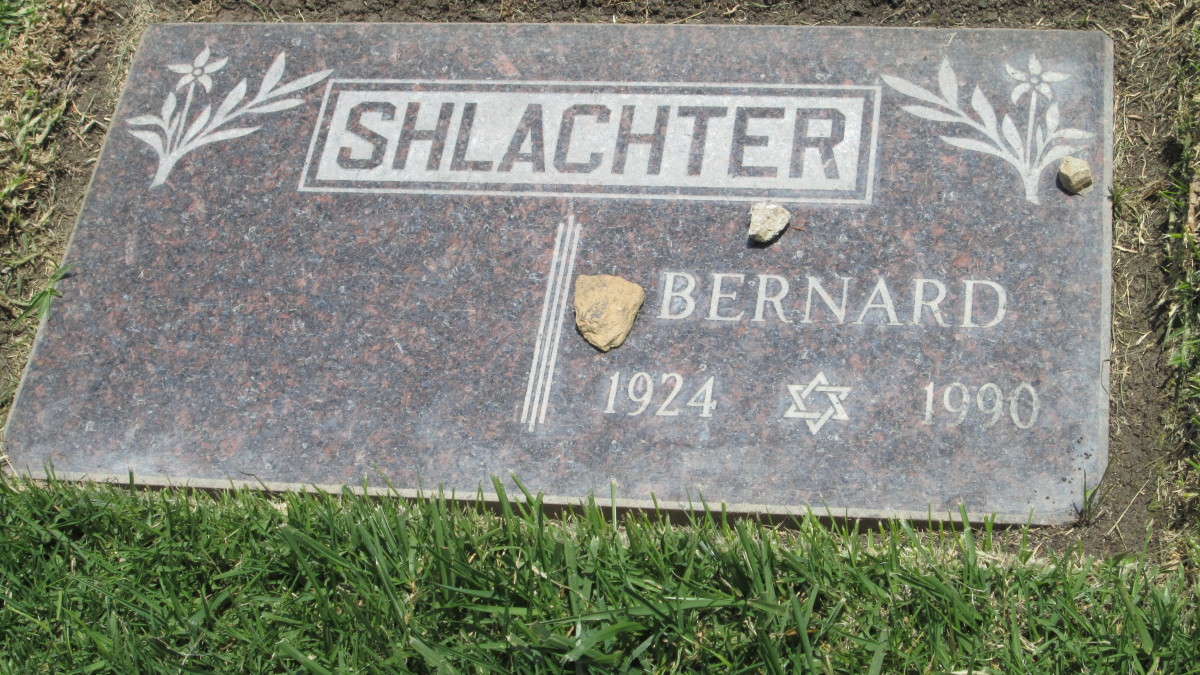
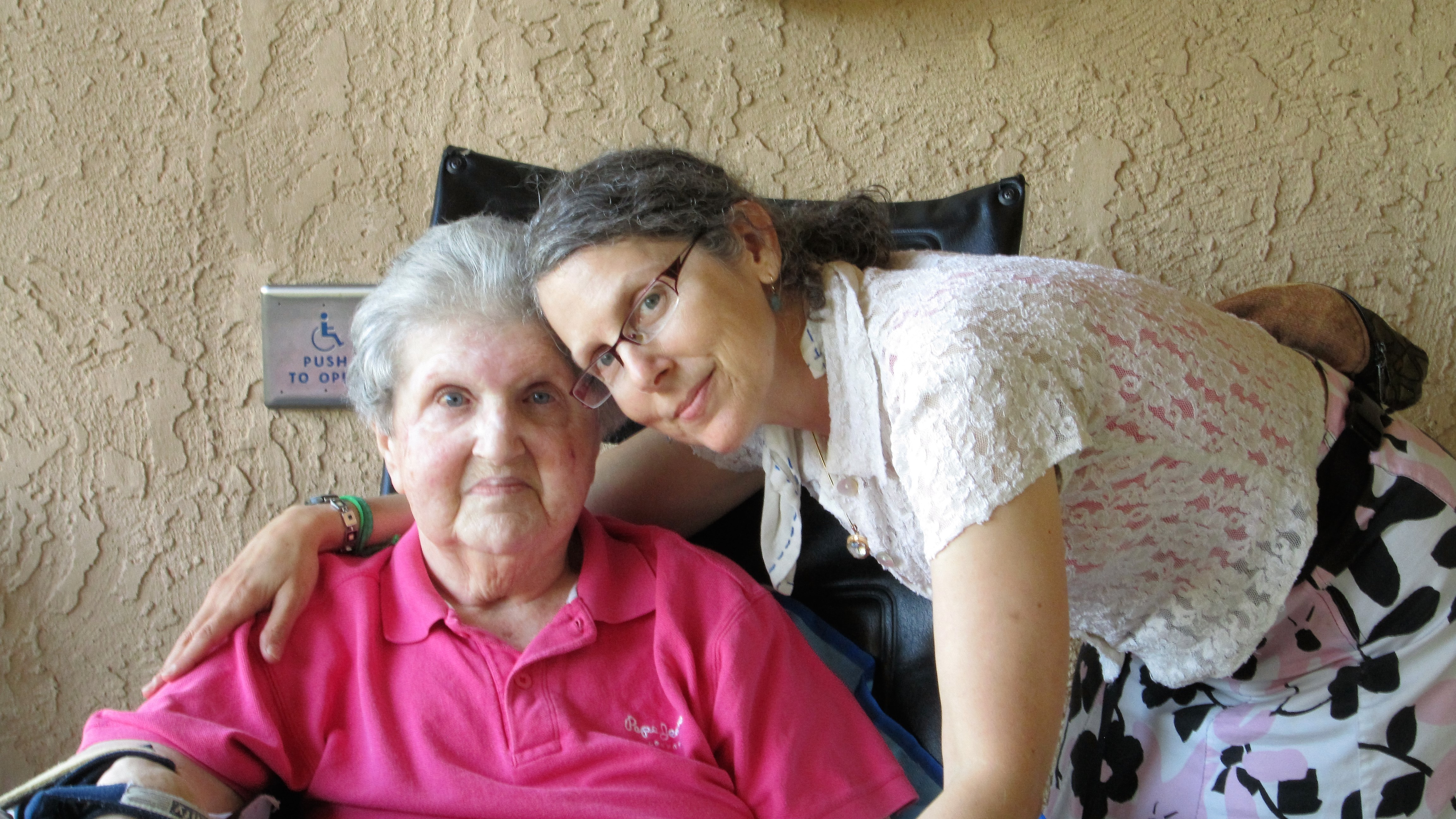
Four lessons that my mother, Shirley Shlachter of blessed memory, taught me.

My mother taught me to say thanks. So let me begin by thanking the Los Alamos Jewish Center for organizing this event, for providing me with a slot on the agenda, and in particular, I’d like to thank Sy Stange and Rachel Adler who spearheaded tonight’s vigil.

The second teaching from my mother was that I should use words, not fists, to solve a disagreement. How should we solve disagreements? Not with violence, not with hatred, but with dialog – which involves both talking and listening. There is an old saying that God created us with one mouth and two ears so that we might spend twice as much time listening as talking. And we need to be in dialog not only with those who are like us but with those who differ from us in gender, in religion, in nationality, in socio-economic class, in age, and even in party affiliation. Central in Jewish tradition is that God created people in God’s image – a radical teaching found in Genesis 1:27, and a Jewish text from over two thousand years ago says that at first, only a single human was created, to teach that if anyone destroys a single human, it is as if they destroyed the whole world… And in the beginning, only a single human was created for the sake of peace in the world that no one may say to another “my ancestor was greater than your ancestor.”

Speaking of my ancestors, my grandparents to be exact – they all came to this country as immigrants, and they were helped by HIAS, then called the Hebrew Immigrant Aid Society. I applaud the decision of the Los Alamos Jewish Center to use this vigil as an opportunity to raise funds for HIAS, and I proudly wear this pin from HIAS which says “My People Were Refugees Too.”

My mother also taught me that when I come to an intersection, I should look behind me as well as in front of me. I believe we are at an intersection right now in this country. And so I look behind exactly 80 years next week to a terrible event known as Kristallnacht. On November 9-10, 1938, a Nazi government-inspired pogrom against the Jews in Germany and Austria was launched. Kristallnacht resulted in at least 91 deaths, the destruction of nearly 300 synagogues and over 7000 Jewish-owned businesses, plus the deportation to concentration camps of 30,000 Jewish men. It foreshadowed the genocide to come.

As for my mother’s teaching about looking ahead when I come to an intersection, if we look far in the future to a messianic era, we read in Isaiah 11:6 “The wolf shall dwell with the lamb, the leopard lie down with the kid…”

Maybe that’s a stretch, but I envision a day in the near future when the elephant will lie down with the donkey, the Republican elephant and the Democratic donkey, and I encourage you to vote next week to make that choice of an elephant or a donkey, but to do so without the animosity that is sadly spreading through our society.

And may God spread over all of us God’s sukkah of peace.
Posted in Uncategorized

Marking the Passage of Time

IMG_3342This seems to be a season of anniversaries. My reading list (below) includes Sarah’s Key by Tatiana de Rosney, which recounts the horrific Vélodrome d’Hiver roundup in Paris on July 16, 1942. Over 10,000 Jews were arrested, the majority being women and children; almost none survived the death camps. July 16 also marked the 73rd anniversary of the Trinity atomic bomb test in southern New Mexico, and Los Alamos has been observing the 75th anniversary of its establishment as the lead site for the Manhattan Project. The Oasis Lifelong Adventure program provided me with a venue in Albuquerque to present a talk on the Jews at Los Alamos during the Manhattan Project era, and I enjoyed catching up with some of our ex-patriate Los Alamosans who’ve moved “off the hill” to enjoy Albuquerque’s warmer climes.

In anticipation of a production of Dr. Atomic in Santa Fe, an opera which depicts Los Alamos as it prepared for the Trinity test, I served as emcee for the showing of a documentary called The Trials of J. Robert Oppenheimer, conducted under the joint auspices of the Los Alamos Jewish Center and the New Mexico Jewish Historical Society. I chose to mark the 70th anniversary of the establishment of Israel at that showing (which fell on the secular calendar anniversary) by reading from Ben-Gurion’s Declaration of State of Israel. The Manhattan Project and its Jews were also the subject of a recent article in the San Diego Jewish Journal by Judie Fein (http://sdjewishjournal.com/sdjj/june-2018/jews-and-the-atomic-bomb/) in which I am quoted extensively.

At HaMakom where much of my rabbi-ing takes place, I offered a blessing and wishes for Chazzan Cindy as she celebrated a birthday anniversary by conducting a “Beatles Shabbat”. I also led a Bet Din to welcome two new members into the Jewish community; their conversion to Judaism will forever be celebrated on the eve of the anniversary of our receiving the Ten Commandments at Mount Sinai on Shavuot. In two synagogues separated by over 1300 miles, my brother Ted and I each had the 3rd Aliyah on Shavuot and got a close look as the Decalogue was chanted. That day was bittersweet; it also marked the anniversary of what would have been my Dad’s 94th birthday.

I continue to share a story each Friday night that I lead services in Los Alamos. During this past quarter, I gave a talk on Judaism and Immigration entitled “Jews Are No Strangers to the Strangers in Our Midst” and a mini-lecture and demonstration on tefillin at a Tikkun Leyl Shavuot, a late-night study session on the holiday of Shavuot. I also conducted the funeral for Evelyn Frank Krems who knew many of the great physicists associated with Los Alamos and I spoke at a memorial for long-time New Mexico resident Frederik Weindling. Balancing those sad events was one of the most enjoyable experiences I’ve had in a synagogue, when one of our HaMakom congregants proposed to his now-fiancée at a Shabbat morning service. I hope the couple will soon have a date they’ll want to mark as their wedding anniversary. Which reminds me – September 2 and/or 15 Elul are coming up soon, so not only are the High Holidays around the corner, but I need to buy a wedding anniversary gift for Beverly!

B’shalom,
Rabbi Jack

Reading list of the past quarter (special mention for those with an asterisk):

The Art of Loving – Erich Fromm
Moshe Dayan – Israel’s Controversial Hero – Mordechai Bar-On*
The Pleasure of Finding Things Out – Richard Feynman (honoring the 100th centennial of his birth)
Snapshots – Michal Govrin
Rosh Hashanah Yom Kippur Survival Kit – Shimon Apisdorf*
Loving and Beloved: Tales of Rabbi Levi Yitzhak of Berdichev – Simcha Raz
The 188th Crybaby Brigade – Joel Chasnoff*
Kaddish for a Child Not Born – Imre Kertesz
The Gaon of Vilna – Immanuel Etkes
Tamara Walks on Water – Shifra Horn
What Went Wrong? The Clash Between Islam and Modernity in the Middle East – Bernard Lewis
Paper Bride – Nava Semel*
On Being Funny: Woody Allen & Comedy – Eric Lax
Eve: A Biblical Play – Zalman Schneur
Modern Research in Jewish Law – Bernard S. Jackson
Boom and Crash Musician: A Percussive Memoir – Sam Denov
The Language God Talks: On Science and Religion – Herman Wouk
Who Will Lead Us? – Samuel Heilman
Maimonides on Human Perfection – Menachem Kellner
Sarah’s Key – Tatiana de Rosney
The Ruined House – Ruby Namdar

Posted in Rabbi Jack's Quarterly

Buildings Without Congregations – Congregations Without Buildings

Temple Aaron, Trinidad, CO

Temple Aaron, Trinidad, CO

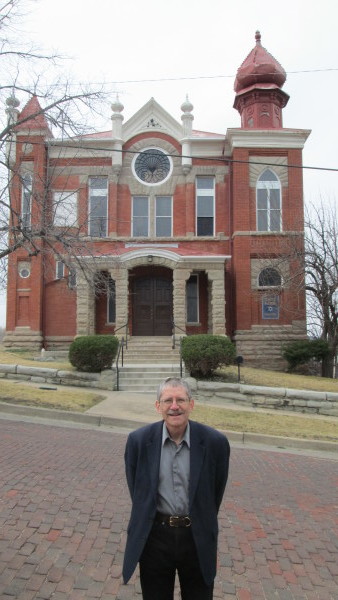
It’s no surprise that there exist synagogue buildings without congregations of Jews – we are a wandering people who have picked up and left our homes, sometimes in search of a better economic environment and sometimes under duress. Last month, Beverly and I had the privilege of joining a group of over 30 Jews from as far south as southern New Mexico and as far north as Boulder, Colorado, to lead a community seder in the historic Temple Aaron in Trinidad, Colorado. The building is magnificent, but alas, there is no longer much of a Jewish presence in the town, and the building needs financial support to remain a Jewish establishment. For more details about the heroic effort to stabilize the situation, see https://www.gofundme.com/temple-aaron-preservation.

On the flip side, congregations without buildings are a significant part of my rabbi experiences this past quarter. HaMakom, the progressive, renewal-ish group in Santa Fe, recently began renting space in the beautiful Beit Tikva shul, and the arrangement has been beneficial to both groups. We’ve even held a few joint activities including a Tu Bi Shevat seder and a Yom HaShoah Remembrance event. Liturgically, my regular rabbi work has involved co-leading Shabbat morning, occasional Friday night, Purim, and community seder services with Hazzan Cindy at HaMakom, and leading Friday night services at the Los Alamos Jewish Center the rest of the month. I’ve also had the opportunity to make a few remarks at various events, both sad and joyous. I struggled a lot with the right words I delivered at a non-denominational candlelight vigil following the Parkland, Texas, shooting, eventually closing my speech with a responsive “Dayenu – it should have been enough” as I listed schools where children have been slain by someone with a gun. I had fun speaking at an upshirin (first haircut for a Jewish boy, traditionally at age 3), at the opening of a session of the New Mexico State Senate, at our farewell HaMakom event in the Unitarian Universalist congregation in Santa Fe, at a Life and Legacy event in Albuquerque hosted by the Jewish Federation of New Mexico, and at a Bat Mitzvah celebration in Beijing, China. The last was a whirlwind (literally weekend) trip to share in the simcha with my family away from home, Kehillat Beijing, another congregation that is without its own building,

Perhaps it’s this wandering that makes Jews so sympathetic, in general, to immigrants and refugees. In response to recent events, I prepared a talk entitled “The Jews Are No Strangers to the Stranger in our Midst: Jewish Texts on Immigration” and have delivered it both in Los Alamos and at the Moishe House in Beijing just before heading to the airport. Despite, or perhaps because of our collective immigrant experience, it’s truly a small Jewish world; I was startled at the Beijing airport on my return trip to hear someone say “Hey, that’s Rabbi Jack!” About 20 high school students from the Milken Community Schools Jewish Day School in Los Angeles were on their way home after a week-long service project in China; the group had attended Kehillat Beijing’s Friday night service. I guess even if we find ourselves without synagogue buildings, we manage to find each other, and that seems more important.

The long plane flights and a little down time during Pesach allowed me to expand my reading list. Many of the books deal with the Jewish immigrant or refugee experience, and my favorites are marked by an asterisk. I’d also like to take the opportunity to promote a book by my friend, Rahel Halabe. Her biblical Hebrew textbook Hinneh is availabe in the new revised edition published by Hebrew University Magnes Press at https://www.magnes-press.com/Authors/Rahel+Halabe.aspx?name=Rahel+Halabe

B’shalom,
Rabbi Jack

Pioneers by S. An-sky; translated by Rose Waldman
Tales of Bialystok – Charles Zachariah Goldberg
Louis D. Brandeis: American Prophet – Jeffrey Rosen
The Imaginary Number* – Yizhak Oren
The Essential Klezmer* – Seth Rogovoy
Love Burns – Edna Mazya
The Exile Book of Yiddish Women Writers – ed. Frieda Johles Forman
Confronting Omnicide: Jewish Reflections on Weapons of Mass Destruction – ed. Daniel Landes
Peggy Guggenheim: The Shock of the Modern – Francine Prose (recommended by my friend Kim)
Finding G_d in Unexpected Places – Rabbi Jack Riemer
I’m Not Even a Grown-Up – The Diary of Jerzy Feliks Urman – ed. Anthony Rudolf
Writing Palestine 1933-1950: Dorothy Kahn Bar-Adon – ed. Esther Carmel Hakim and Nancy Rosenfeld
Yasmine* – Eli Amir (refugee/immigrant from Baghdad to Israel)
A Backpack, a Bear, and Eight Crates of Vodka* – Lev Golinkin (refugee from Ukraine to USA)
Three Novels (Uncle Moses, Chaim Lederer’s Return, Judge Not) – Sholem Asch (immigrants from the Pale to USA)

Posted in Rabbi Jack's Quarterly

Happy New Year for 20“Chai”

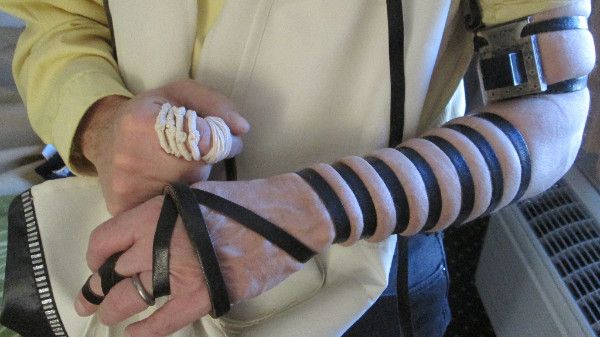
Tefillin wrapped on armI am thankful to be able to write yet another quarterly Rabbinic message (I’m actually particularly thankful to be writing this today because I’m getting over a bug which could have been much worse). The Talmud (B. Men. 43b) quotes Rabbi Meir who says that one is obligated to recite one hundred blessings daily. That may seem like a lot, but here’s a challenge for you – come up with ten things for which you are thankful for on each of the next ten days. I think you’ll be surprised at how profound an effect this has on your outlook.

Life cycle events, regular services, and some presentations kept me busy rabbinically this past quarter. We had a Bat Mitzvah ceremony in Los Alamos for Evia Alexander, marking a second-generation of Alexander B’nai Mitzvah celebrations. It was most enjoyable to see the whole Alexander clan together for this Simcha. We also had a truly remarkable celebration at HaMakom in Santa Fe as the entire community shared in the joy of Itai Rosen’s becoming a Bar Mitzvah. End-of-life events remind us to be thankful for our very lives; I participated in a tahara to help prepare a body for its final journey to the grave, led an unveiling ceremony at Guaje Pines in Los Alamos, and assisted Beverly in marking both the end of her 11-month kaddish recitation and first Yahrzeit for her mom, Justine Post.

I love to interject brief teachings at events, and opportunities for such teachings occurred at the general membership meetings for both the LAJC and HaMakom as well as at the wonderful Matriarchs event honoring six inspirational women at HaMakom. Beverly and I were thankful to receive aliyot at Madison Jewish Center where we were married years ago and at Beit Tikvah in Santa Fe where we joined the congregation during our relaxing December break.

More extended teaching opportunities were presented by the New Mexico Jewish Historical Society where I spoke about “Fat Man and the Development of a Plutonium Bomb: A Crisis at Los Alamos and the Jews Who Solved It,” by Los Alamos National Laboratory which recorded my talk entitled “Sine Qua Non: Foreign-Born Scientists at Los Alamos,” and by my friends Ron Duncan Hart and Gloria Abella Bellan who filmed me delivering a talk on “Jews in Theory” about the Jews at Los Alamos during the Manhattan Project. https://www.youtube.com/watch?v=AwLsS8gkpVw&index=4&list=PLmg8fwxbUbH38Ydd5AjftD7W9sxnVfBcl

I’m of course thankful for all the books we’ve acquired as well as those which I’ve read over the past quarter (my reading list is below), and I’m also appreciative for the books I’ve been gifted recently including “Just Call Me ‘Mr. Lucky’: An Ethical Will Entwined in an Autobiography” by HaMakom member Chuck Friedman and “Sholem Aleichem – Jewish Children” from the Gaon Jewish Classics by the aforementioned Ron and Gloria.

Both Dov and Orli were in Los Alamos for a brief spell, and I am thankful that we had a delicious and festive meal with them on Shabbat evening courtesy of Beverly. I especially liked giving both kids their traditional Shabbat blessings live instead of at a distance.

I look forward as always to hearing back from you, particularly if you try the thankfulness exercise I outlined at the beginning of this message. You might start by being thankful you enjoy the gift of reading.

B’shalom,
Rabbi Jack

Quarterly Reading List:
Black Hole Blues and Other Songs from Outer Space – Janna Levin
Abraham – Bruce Feiler
The Dove Flyer – Eli Amir**
Hasidic Responses to the Holocaust in the Light of Hasidic Thought – Pesach Schindler
The Akedah – Louis Berman
The Pope of Physics: Enrico Fermi and the Birth of the Atomic Age – Segre and Hoerlin
The Ladder of Jacob – Kugel
Einstein and the Rabbi – Naomi Levy*
How to Be an Extremely Reform Jew – Bader
All the Rivers – Dorit Rabinyan
Three Floors Up – Eshkol Nevo
If All the Seas Were Ink – Ilana Kurshan*
When General Grant Expelled the Jews – Jonathan Sarna
Textual Knowledge: Teaching the Bible in Theory and in Practice – Barry Holtz
Adam and Thomas – Aharon Appelfeld
The Parable and its Lesson – S.Y. Agnon
The Exodus – Richard Elliott Friedman*
The Undoing Project – Michael Lewis

Posted in Rabbi Jack's Quarterly

Carpe Diem – “And if not now, then when?” (Pirkei Avoth 1:14)

IMG_3289
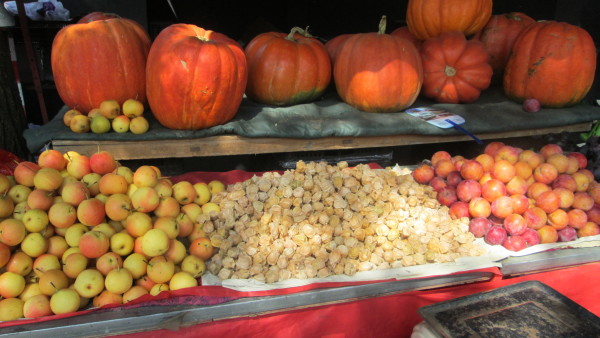
“While your fire is burning, roast your pumpkin.” So said Rabbi Yohanan somewhat cryptically in Talmudic Tractate Sanhedrin (33b), but whatever he meant, I don’t think he was referring to a non-Jewish holiday at the end of October. It is the start of the month of Cheshvan as I write this message (Cheshvan being the favorite of rabbis the world over because it is the only month without any holidays)!

Backing up a few months for this quarterly e-mail, however, finds us in Av which traditionally begins with sadness, and I observed the anniversary of the destruction of the Temples, Tisha B’Av, in Alexandria, VA with Congregation Agudas Achim while on travel in D.C. Later in Av I marked my father’s 27th Yahrzeit by leading a minyan in Los Alamos. Likely Rabbi Yohanan was saying that we should seize opportunities and use our time wisely. Beverly and I indeed seized the opportunity to join millions of Americans and witness the total solar eclipse on the last day of Av, and clearly the month went out in a blaze of glory. What an amazing experience! We joined the Mt. Sinai Congregation in Cheyenne, WY for Shabbat services a few days before totality where, in addition to an Aliyah, Rabbi Moldo provided me with a speaking slot. I described eclipses from both physics and Jewish perspectives, and the talk also led to an extensive article in the Intermountain Jewish News (Denver).

My rabbi-ing these past three months of course centered on my visit to Beijing, China, where I was thrilled to celebrate the High Holidays with Kehillat Beijing for the fourth year in a row. The congregation of ex-pats always amazes me, and the number of young Jewish adults is simply wonderful. There are many intelligent, opinionated Jews in their 20s and 30s, and each voluntarily identifies with the vibrant Jewish community. We had a thought-provoking discussion about the State of Israel over a Shabbat Shuvah retreat between Rosh HaShanah and Yom Kippur, and I now look at the words of Prayers for Israel much more carefully thanks to the discussion leaders. Over the course of our two-week trip, I also provided some insights into the structure of a worship service and gave a talk at the Moishe House about Jewish mysticism. Between the holidays, Beverly and I took a two-day vacation to Harbin in northeast China and saw two restored (but not functioning) synagogues and a Jewish cemetery in this city that once counted among its residents as many as 20,000 Russian Jews.

Life cycle events fill in the gaps, and I ran the gamut last quarter from blessing children at a consecration service on Shimini Atzeret (the day before Simchat Torah) to teaching some B’nai Mitzvah students to conducting a wedding to chanting a wedding blessing in Boston for Beverly’s niece to presiding over a funeral for long-time Los Alamos resident, Ruth Sherman, z”l (may her memory serve as a blessing). I also gave a few other talks around town – one to students, postdocs and early career staff at Los Alamos National Laboratory entitled (Non) Standard Deviations about various detours from a standard scientific research career, including my rabbinic ordination and responsibilities; and another talk at a local church where I summarized the Jewish View on Hope to a Faith and Science group. All in all, I’ve been roasting plenty of pumpkins and using the light to illuminate my reading – my last quarter’s book list is below.

B’shalom,
Rabbi Jack

Addiction and Its Consequences in Jewish Law – edited by Walter Jacob
Adventures of a Mathematician – Stan Ulam
Four Stories – Etgar Keret
Crafting the 613 Commandments: Maimonides on the Enumeration, Classification, and Formulation of the Scriptural Commandments – Albert Friedberg
Moon: A Brief History – Bernd Brunner (in preparation for the eclipse)
Alter – Jacob Dineson (tr. Jane Peppler)
The Thirteenth Tribe – Arthur Koestler
The Extra – A.B. Yehoshua
Lost in America* – Sherwin Nuland
Inside Woody Allen – Stuart Hampl and Woody Allen
The Jews in Harbin – Qu Wei and Li Shuxiao (a wonderful gift from a friend in Beijing)
O Jerusalem* – Collins and LaPierre
Preserving the Hunger: An Isaac Rosenfeld Reader – ed. Mark Shechner
I, Sarah Steinway – Mary E. Carter (not yet published but keep your eyes open for it soon)
Subtle is the Lord: The Science and the Life of Albert Einstein – Abraham Pais
Legends of the Chinese Jews of Kaifeng – Xu Xin
And a special thanks to Joe and Janet Eigner for their generous donation to my library and the libraries at HaMakom in Santa Fe and the Los Alamos Jewish Center

Posted in Rabbi Jack's Quarterly

To Life-L’Chayim

IMG_1396An anonymous rabbi in the Talmud is quoted as saying, “I don’t want to achieve immortality through my work; I want to achieve immortality through not dying.” OK, maybe that’s not in the Talmud but rather attributed to Woody Allen. For me, there is no definitive Jewish answer to the question about what happens to us after we die, and this is consistent with the emphasis that Judaism places on life in the here and now. We celebrate life, and while death is inevitable, it is invariably a loss. I lost several friends and colleagues this past quarter; I conducted funeral services for Haskell Sheinberg and Pat Kristal; spoke at the memorial service for David Holtkamp; and led the unveiling ceremony for Louis Erhard. May their memories serve as a blessing. I hope my sole remaining visit to a cemetery this year is Kever Avot, the traditional visit before or during the High Holiday season. In addition to reminding ourselves of the end we, too, will face, we are reminded of the many lessons we learned from the lives of those who are no longer with us.

My rabbinic responsibilities this quarter included some joyous moments as well. I had multiple opportunities to lead Friday night services in Los Alamos. Included in my usual leading or co-leading for Friday nights and Saturday mornings at HaMakom in Santa Fe was a birthday blessing for Chazan Cindy. I also gave reprises of a couple of Jewish-themed talks: at HaMakom, I paid tribute to Jewish authors Else Lasker-Schuler, Dvora Baron and Esther Singer Kreitman; and I spoke on the Jews in Theoretical Division during the Manhattan Project for a visiting group from Beth El Synagogue in St. Louis Park, Minnesota. Friends of friends passed through Los Alamos on a multi-day bike trip, and I delivered an impromptu talk about my path to the rabbinate as well as a capsule summary of the history of the Laboratory and its current mission and research. Whenever I can, I inject a rabbinic story or teaching into an event, and I was successful in this regard at the annual membership meeting for the LAJC, at the Shabbat service honoring High School graduates in Los Alamos, and at the luncheon for Burton and Susan Krohn celebrating their 50th wedding anniversary. Several organizations within the Santa Fe Jewish community collaborated on a Yom HaShoah service this year, and I was honored to participate. And thanks go to Beth Shalom in Vancouver, Canada, who offered aliyot to me and Beverly at several of the services we attended while visiting Dov over Shavuot. By the way, their blintzes were exceptionally good!

The plane flight to and from Vancouver provided at least one block of reading time this quarter, and my reading list for this period is captured below. The Eva Hoffman book had been sitting unread on my shelf for some years, and coincidentally it has a Jewish Vancouver connection. The ordering is chronological, not a measure of entertainment value, and it mixes fiction with non-fiction. Celebrating life is high on my list, and reading is definitely one way to do so.
B’shalom,
Rabbi Jack

The Zookeeper’s Wife – Diane Ackerman

Lost in Translation – Eva Hoffman

Vladimir Jabotinsky’s Story of My Life – edited by Brian Horowitz and Leonid Katsis (originally published in Hebrew)

Storm Over Paris – Blanche (Blume) Lempel (translated from Yiddish)

Touching Heaven Touching Earth – Rabbi Shmuel Avidor HaCohen

Six Days of War – Michael Oren

Judas – Amos Oz (translated from Hebrew)

Modern Midrash – David Jacobson

Street of Steps – Yehudit Hendel (translated from Hebrew)

Rabbi Akiva: Sage of the Talmud – Barry Holtz

Jewish Stories of Love and Marriage – Sandy Eisenberg Sasso and Peninnah Schram

A Non-Swimmer Considers Her Mikvah – Mary Carter (New Mexico author)

Into the Fullness of the Void – Dov Elbaum (translated from Hebrew)

Posted in Rabbi Jack's Quarterly

A Truly Crumby Holiday

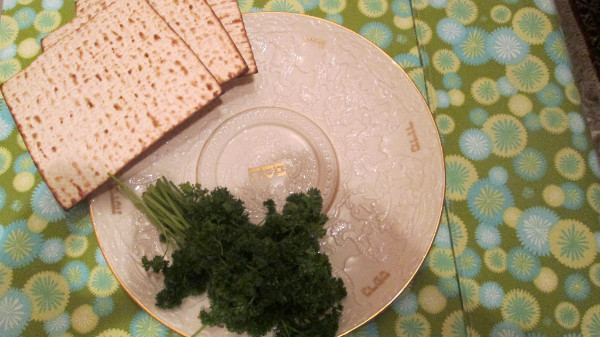
b6a5c55a-9063-436e-8f57-575cca39e2a0I’ve always thought that Passover was a crumby holiday. Indeed, the floor is now littered with shards of matzah as I write this quarterly message on Day 6. I love the family aspects of the seder and the opportunity to see dishes and utensils that have been patiently waiting out the year in the garage as well as friends and relatives (this year, brother Ted) whom we’ve not seen for nearly as long.

This go-around, however, I found that a powerful message of Pesach came in the preparatory weeks leading up to the big day. Beverly and (to a much, MUCH lesser extent) I used the time after Purim to do some spring cleaning. Amidst various items on shelves rarely inspected, Beverly came across a cracked charoset bowl, a gift from whom I have absolutely no idea, inexpertly glued decades ago by yours truly using a possibly toxic and almost certainly not kosher-for-Pesach epoxy. “Do we really need to keep this?” Beverly asked. My automatic response was to say “Of course,” and then I realized that I was wrong. Holding on to broken pieces of our past is counter to the message of Passover. With each observance of the holiday, we can begin anew, choosing to shed our enslavement to elements in our childhood or adulthood that hold us back from achieving our full potential. Just because we used to do things one way doesn’t mean that we always need to repeat the process. So, into the trash went the bowl, and with it I hope, went some of the sadness, frustration, and grievances I’ve clung to over the years.

I prepared for Pesach in many rabbinic ways as well this year. Along with leading several Friday night services in Los Alamos and sharing the bima with Hazzan Cindy at HaMakom on Saturday mornings and other Friday nights, I led or co-led Tu Bi-Shevat seders at both shuls, helped in a spirited reading of the Megillah for Purim, and shared responsibility for a practice seder for kids and parents in Santa Fe. By way of engagement with the broader community, I had occasion this past quarter once again to deliver the opening prayer to the New Mexico State Senate and to present a talk in the Los Alamos Lenten Series at the Episcopal Church entitled “Hungering for Jewish Wisdom: The Classic Jewish Texts and Their Insights Into Hunger.” I also was a signatory to an open letter in support of refugees and immigrants prepared by the New Mexico Chapter of the Anti-Defamation League and read material from this organization at a candlelight vigil at the Los Alamos Jewish Center after the multiple bomb threats targeting Jewish Community Centers and other institutions around the country.

Beverly and I were in New Orleans on my mom’s first Yahrzeit, and I shared a brief teaching at the early morning service arranged so graciously by Shir Chadash in nearby Metairie. At HaMakom, I organized a discussion utilizing 19 different haggadot on Shabbat HaGadol, and all these events culminated in my leadership role at two community seders, first in Santa Fe and then in Los Alamos.

Though squeezed into my free time, I was able to escape into many books listed below. An asterisk indicates a particularly high enjoyment level for me, and I’m happy to correspond with those who’d like additional details. I’ve even included a movie, both because I found it hilarious and because it is one I’d recommend that you see before Purim next year. Right after watching it, you should begin your spring cleaning, and if you are wondering whether or not I still have the charoset bowl you gifted me, please let me know.
B’shalom,
Rabbi Jack

Ostend: Stefan Zweig, Joseph Roth, and the Summer Before the Dark – Volker Weidermann*

Poyln: My Life within Jewish Life in Poland, Sketches and Images – Yehiel Yeshaia Trunk*

Studying the Torah: A Guide to In-Depth Interpretation – Avigdor Bonchek

Kabbalat Shabbat – Debra Band*

The Acrophile – Yoram Kaniuk

Bar-Kokhba – Yigael Yadin

Four Alsatian Jewish Families Shape Albuquerque – Noel Pugach

Yosele – Jacob Dinezon

Prayer After the Slaughter – Kurt Tucholsky

Lunar Savings Time – Alex Epstein

Come and Hug Me – Michal Snunit

Sapiens: A Brief History of Humankind – Harari

Rashi – Avraham Grossman

The Divine Feminine in Biblical Wisdom Literature – Rami Shapiro

The Betrayers – David Bezmozgis*

Two She-Bears – Meir Shalev*

Best. State. Ever. – Dave Barry – (no Jewish content, but it helped me prep for the next entry)

For This We Left Egypt? – Dave Barry, et.al.

Moods – Yoel Hoffmann

The Jews of Vienna in the Age of Franz Joseph – Robert Wistrich*

The Medieval Haggadah: Art, Narrative & Religious Imagination – Marc Michael Epstein

Never Again?: The Threat of the New Anti-Semitism – Abraham Foxman

Zero: The Biography of a Dangerous Idea – Charles Seife (really a math book, but some interesting ideas about religious attitudes toward zero, including Jewish ones)

Movie recommendation: For Your Consideration

Posted in Rabbi Jack's Quarterly

Brooklyn’s in the House

Justine & Beverly Post 2015
This quarterly rabbi message is dedicated to the Jews of Brooklyn (and Beverly and I do own a copy of the book of that name edited by Ilana Abramovitch and Sean Galvin). Sadly, Beverly’s mother, Justine Flora Post, passed away in mid-December, and on very short notice, we flew back to New York where I conducted the funeral service and where Beverly sat shiva with her sister. The New Mexico community provided comfort to Beverly at a service I led on the day marking the end of sheloshim, the next phase in the traditional Jewish grieving process. Both shiva (7) and sheloshim (30) are counted from the day of burial, and partial days contribute as full, so both periods conclude after the morning service.

Beverly inherited a love of people and a passion for making the world a better place from her mom, though she did manage to shake the thick Brooklyn accent that Justine possessed until her speech was curtailed by aphasia. My mother was also a Brooklyn girl, and the end of my eleven months of saying kaddish for Shirley practically coincided with Beverly’s end of sheloshim. In 2016 Beverly and I lost the two Brooklyn-born women who gave birth to us and shaped our lives. May their memories serve as blessings.

On my last visit to New York prior to Justine’s death, Beverly and I davened at the Menorah Center for Rehabilitation and Nursing Care in Brooklyn, and that experience awakened a deep sense of gratitude in me. After my aliyah, the rabbi had to wheel everyone else up to the bima for aliyot, help them recite blessings (often word-by-word), hold books for people, wheel people back to their spots, call an aide when someone had a serious coughing fit, and keep everyone on the right page. My rabbinic life has been remarkably easy by comparison.

In addition to leading services at the Los Alamos Jewish Center and HaMakom in Santa Fe and chanting Haftarah at a shul in Seattle while visiting Dov, I gave a few talks this quarter on Jewish topics in various venues. At the Episcopal church in Los Alamos, I lectured on Jewish Scriptural Interpretation with a focus on parashat Noach, and at the annual New Mexico Jewish Historical Society meeting, I spoke on PaRDeS Applied to Jewish Home Rituals while also leading those who were interested in a semi-impromptu Havdalah service at the conclusion of Shabbat in the lobby of the hotel. Recently I delivered a talk at a Santa Fe Jewish Book Council event entitled “Ahead of Their Time: Else Lasker-Schuler, Dvora Baron, and Esther Kreitman.” As a follow-up to a connection made in Beijing, I was interviewed by phone for a Jerusalem radio program in December, though no one I know has mentioned hearing the broadcast.

Among the books I’ve read this quarter, Brooklyn again plays a role, notably in the title of a recently translated collection of Yiddish short stories and in the birthplace of the subject in another interpretive biography in the Yale Jewish Lives series. I suspect you can pick those out of the list without any trouble. Next quarter – Queens?

B’shalom,
Rabbi Jack

The Tale of the 1002nd Night – Joseph Roth*

All Breathing Life Adores Your Name – Zalman Schachter-Shalomi

1492: The Life and Times of Juan Cabezon of Castile – Homero Aridjis

The Voice of the Poor in the Middle Ages: An Anthology of Documents from the Cairo Geniza – Mark Cohen*

The Peace Process – Bruce Jay Friedman

Best-Kept Secrets of Judaism – Reuven Bulka

Oedipus in Brooklyn and Other Stories – Blume Lempel*

Vilna My Vilna – Stories by Abraham Karpinowitz**

Tough Questions Jews Ask – Edward Feinstein

Seven Brief Lessons on Physics – Carlo Rovelli (see p. 40 for an interesting rabbinic anecdote)

Barbra Streisand: Redefining Beauty, Femininity, and Power – Neal Gabler**

Quantum Man: Richard Feynman’s Life in Science – Lawrence Krauss (my favorite physicist – but Queens, not Brooklyn)

Why Be Jewish? A Testament – Edgar Bronfman

A Best-Selling Hebrew Book of the Modern Era: The Book of the Covenant of Pinhas Hurwitz and its Remarkable Legacy – David Ruderman

My Heart – Else Lasker-Schuler

Until the Dawn’s Light – Aharon Appelfeld

From Foe to Friend and Other Stories: A graphic novel by Shay Charka – by S.Y. Agnon

Reimagined: 45 Years of Jewish Art – Mark Podwal

The Internet Revolution and Jewish Law – ed. Walter Jacob

* one asterisk means make sure to put this on your list
** two asterisks means run out and get this now

Posted in Rabbi Jack's Quarterly

(Shake, Shake, Shake) Shake Your Lulav

minyansignopera2016I composed this quarterly rabbinic message immediately after dismantling our sukkah, and there is nothing quite like making me feel that the extended fall holiday season has come to an end as packing up the sukkah kit. Several years ago, Beverly wisely suggested that we buy a kit, and I’ve been delighted ever since with our purchase from the Sukkah Project (https://www.sukkot.com/). We also always buy a fresh lulav and etrog set through Sy Stange who handles the sales for members of the Los Alamos Jewish Center. Beautifying these two mitzvot, dwelling in a sukkah and taking the lulav and etrog have never been easier and can enhance one’s joy during this most joyous of holidays.

Of course, we didn’t start the holiday season with Sukkot. In fact, I had an unexpected trip to New Zealand this past quarter which reminded me that it is only in the northern hemisphere that we asso-ciate the period from Tisha B’Av through Simchat Torah as summer turning to fall. I arrived in New Plymouth, New Zealand, in mid-August the day after a snowfall, and it’s fortunate that Beverly re-minded me to take warm clothing. While I didn’t do any itinerant rabbi-ing on this short trip, I do hope to return and have made a connection with what seems to be a truly welcoming congregation, Temple Sinai, the Wellington Progressive Jewish Congregation.

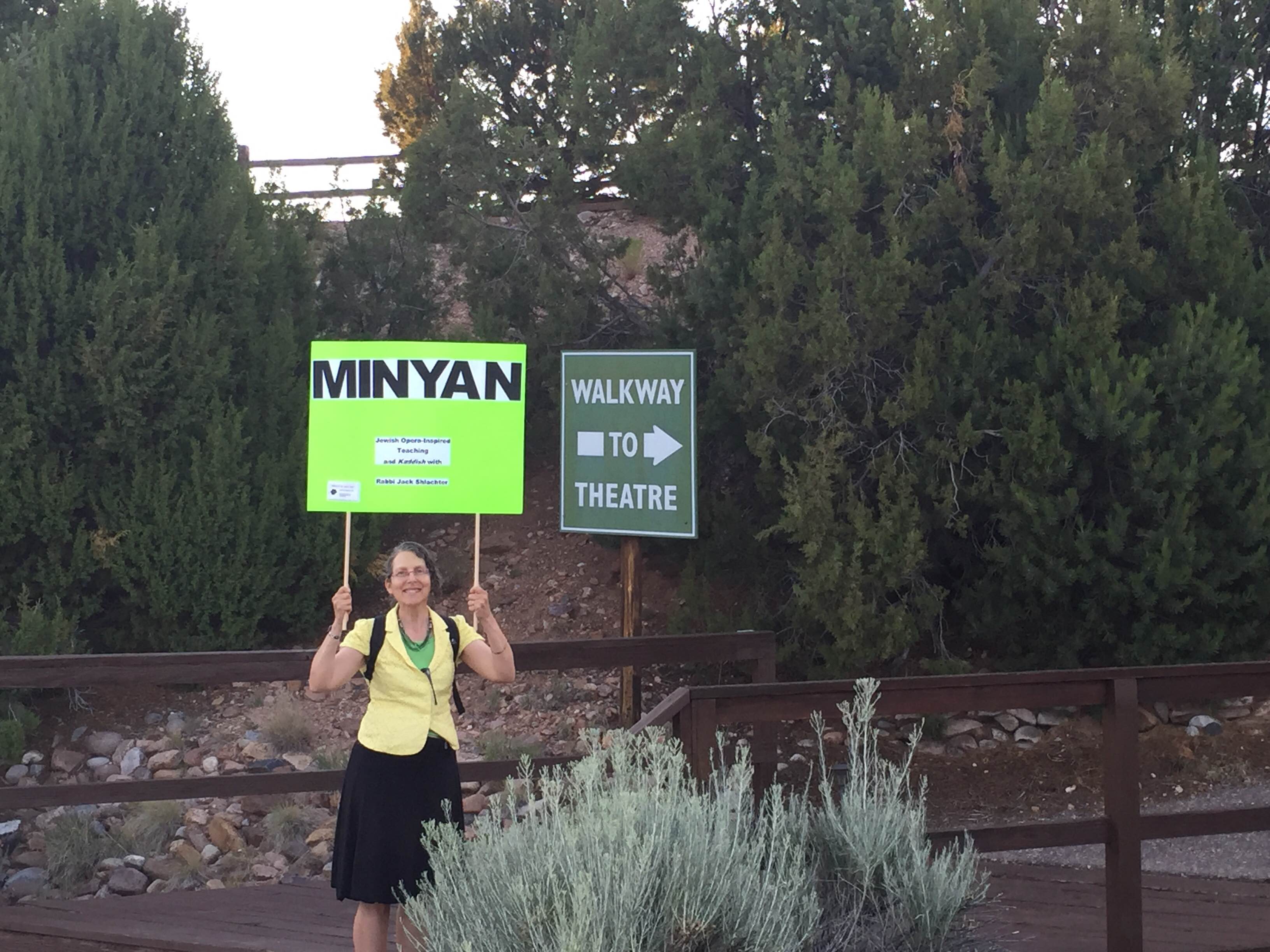
The summer is not only an opportunity to begin the process of teshuva, examining our past year’s behavior in anticipation of Yom Kippur, it is also opera season in Santa Fe. This year we held “Wednesday Night is Minyan Night” at the Santa Fe Opera (see photograph), and offered people a chance to recite kaddish. Kudos to Beverly on her efforts to snag Jews in the crowd. Dov and I took a road trip transporting his belongings up to Vancouver, BC, where he is now relocated, and we spent a lovely Shabbat at Temple Emek Shalom in Ashland, Oregon under the leadership of Rabbi Joshua Boettiger. We also visited with a good friend at the Vancouver JCC (spelled “Centre” of course in Canada).

I managed to bounce around (the globe) for the holidays – Selichot with HaMakom in Santa Fe, and then Rosh HaShanah and Yom Kippur again with the wonderful folks at Kehillat Beijing. This trip was only two weeks long because of pressing business back at Los Alamos National Laboratory, but I thoroughly enjoyed meeting new congregants and reconnecting with people we met two years ago and last year. In addition to services at the Capital Club with assistance from several volunteers (Leon, Amitai, Zhu, Amy, and others), we conducted a staged reading of Merle Feld’s powerful play, The Gates Are Closing, and I spoke to a group at the Moishe House on the Ten Commandments. Upon my return, we celebrated various Sukkot and Simchat Torah services with the Los Alamos Jewish Center, HaMakom, and Kol Beramah in Santa Fe. Just before heading to China, I gave a talk at Fuller Lodge in Los Alamos in conjunction with a New Mexico Jewish Historical Society event. My presentation was entitled “A Manhattan Minyan – Ten Jews Who Were Part of the Manhattan Project in Los Alamos 1943-1945.”

I’ve hardly bought any books lately (shocking), but I did acquire a copy of The Jews in Harbin as a treasured gift while in China. Below are some books I read this past quarter – my favorites are marked with an asterisk.

The joy of the end of the holiday season is always tempered by the reality that life is finite; this is one of the reasons that we read Kohelet (Ecclesiastes) on Sukkot. For the friends and family of Allen Cogbill, his unexpected death on Simchat Torah forced us to remember the teaching that each day is a gift. I was honored to officiate at Allen’s funeral and already miss his regular presence on Friday evenings. May his memory serve as a blessing.

B’shalom,

Rabbi Jack

Honor Thy Father and Mother – Gerald Blidstein
Hotel Savoy – Joseph Roth
Abraham:The World’s First (But Certainly Not Last) Jewish Lawyer – Alan Dershowitz
Where We Find Ourselves: Jewish Women Around the World Write About Home – Miriam Ben-Yoseph and Deborah Nodler Rosen
Adam Resurrected – Yoram Kaniuk
From That Time and Place: A Memoir, 1938-1947 – Lucy Dawidowicz*
Inside the Hornet’s Head: An Anthology of Jewish American Writing – Jerome Charyn
Becoming Freud – Adam Phillips
The 5 Love Languages: Jewish Marriage Initiative SPECIAL EDITION – Gary Chapman
Mystic Tales from the Zohar – Aryeh Wineman*
The Mezuzah in the Madonna’s Foot – Trudi Alexy
Arguing with the Storm:Stories by Yiddish Women Writers – ed Rhea Tregebov
Neuland – Eshkol Nevo*
The Character of Physical Law – Richard Feynman* (Not a Judaica book as such but wonderful and contains a thought-provoking passage about the roles of religion and science)

Posted in Rabbi Jack's Quarterly

Our Defects Make Us Interesting

I was asked to write a blog post for “Sinai and Synapses” about my being both a rabbi and a scientist.

KippahWhStar
When I was five years old, I received a Newtonian reflecting telescope as a Hanukkah present from my parents. I was already fascinated by astronomy, and with my father’s help, I assembled a model of the solar system later that year which I brought to kindergarten for show and tell. My parents were proud to nurture the interest of a budding scientist. Had I expressed an equal interest in Judaism as a career path, I doubt there would have been the same positive response. Nice Jewish boys did not grow up to be rabbis in my suburban Chicago neighborhood. This is not to imply that Judaism was unimportant in our lives, only that the rabbinate was not a conceivable occupation for a baby boomer, and spirituality was downplayed. In my household, Judaism was approached from a rationalist perspective. I remember my dad studying natural explanations for the ten plagues and referring to Midrash derisively as bubbe meises, old wives’ tales.

I eventually went off to college and attended the California Institute of Technology. By the end of my four years, most of my practice of Judaism had disappeared, replaced by a single-minded devotion to physics as the guiding force of my life. It wasn’t until I came to Los Alamos for the completion of my thesis work that my attraction to Judaism was kindled. Finding myself in a town where I knew absolutely no one, I realized that one way to meet people might be at the synagogue. In relatively short order, my naturally strong singing voice and familiarity with the Shabbat liturgy from years of (mostly) unenthusiastic attendance at Hebrew school resulted in my assuming increasing responsibilities in the largely lay-led congregation, and within five years I was serving as hazzan at High Holiday services.

My ability to master a complex subject, honed by over a decade of physics training, served me well as I dove into the sea of Jewish learning. To my surprise, Judaism was not childish; the material which was taught to me as a child was simply age-appropriately childish. Physics has provided me with a set of tools to examine the natural world, and Judaism has helped give meaning to what I see. The beauty of a rainbow is not diminished by pondering the equations governing the refraction of light, for example, and reciting the blessing upon seeing the rainbow elevates the experience and helps ground me in a universe which manifests Divine splendor. Furthermore, physics says virtually nothing about how to interact with other people, while Judaism offers incredible wisdom on human relationships.

I consider myself truly blessed to have pursued two passions simultaneously, and my primary focus as a rabbi has been to introduce adult Jews to the wonders of Judaism as viewed from the eyes of a left-brain physicist. Sadly, I had no trouble securing the domain name www.physicsrabbi.com; it seems that few people experience firsthand the compatibility of the two professions. But if you are scientifically-minded and want to learn more about Judaism, please don’t hesitate to write to me at physicsrabbi@gmail.com. (I didn’t have trouble getting that address either).

Posted in Uncategorized